
[ Croustylab ]
Patch management that is safe to leave on.
CroustyPatch keeps a fleet of Linux machines up to date. It decides what to patch and when, applies it, checks that the machine still works, and puts everything back if it does not.
01 · THE INTERFACE
See it at work
Real screens of the web interface, with demo data. Swipe, use the arrows or the keyboard.
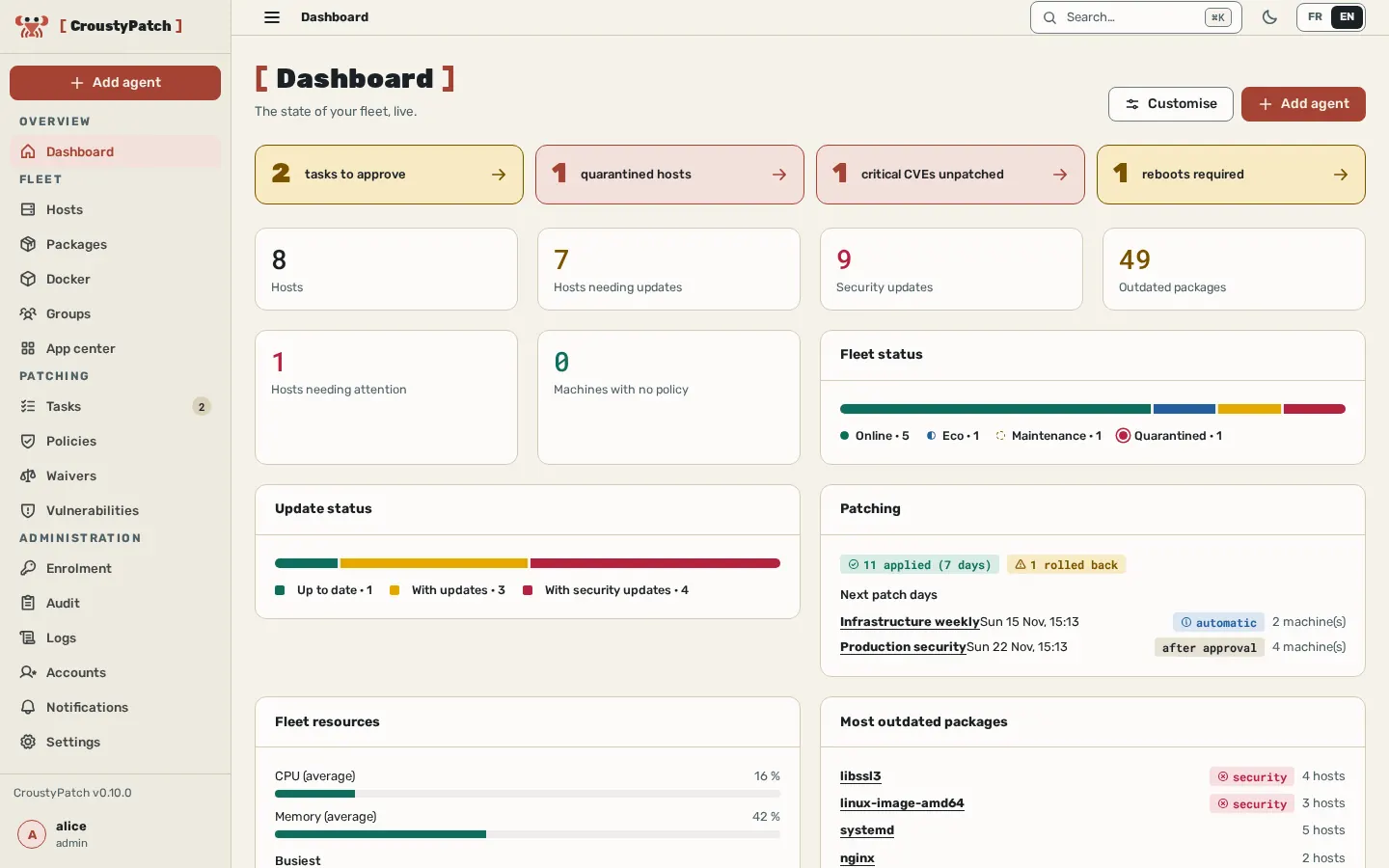
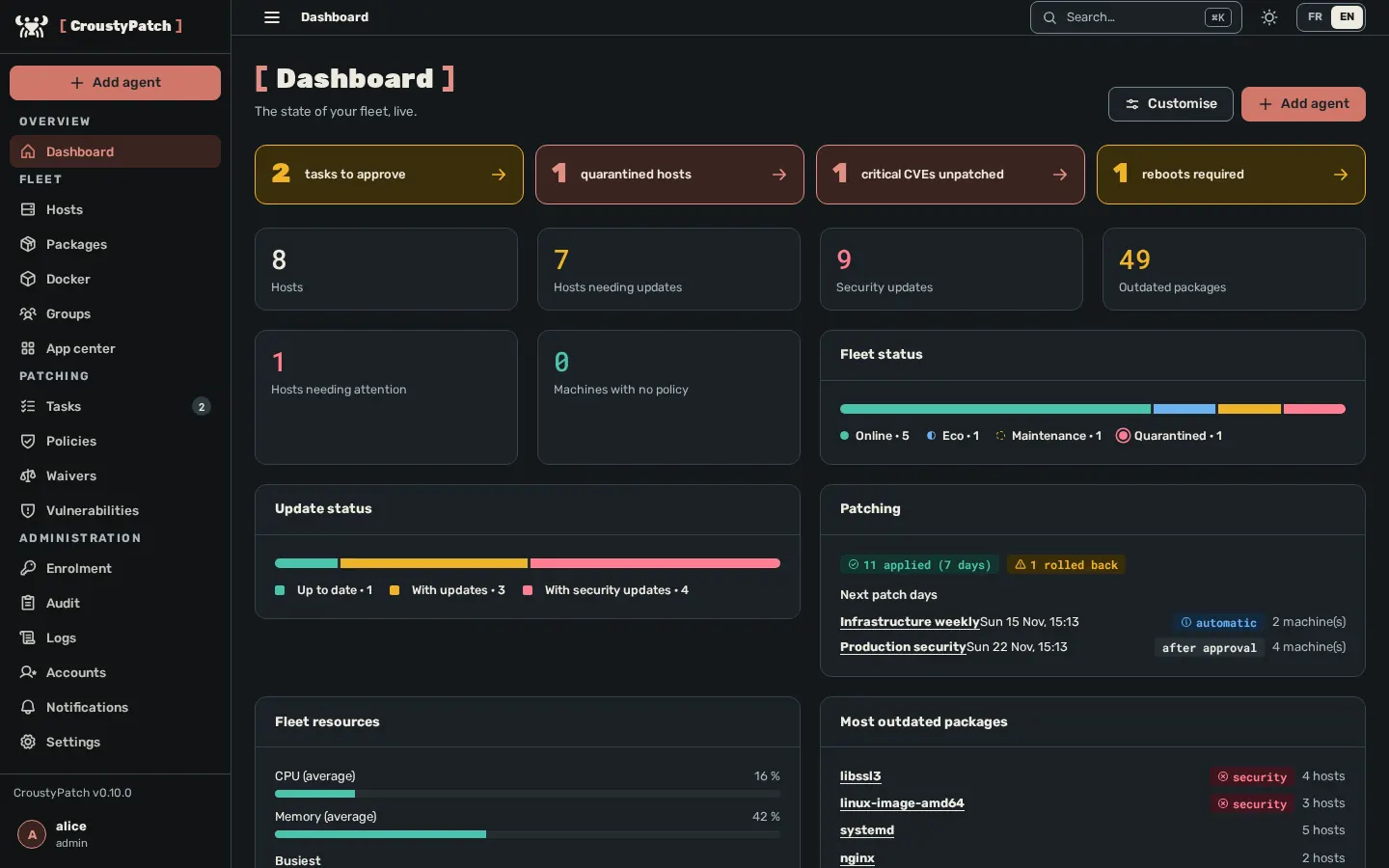
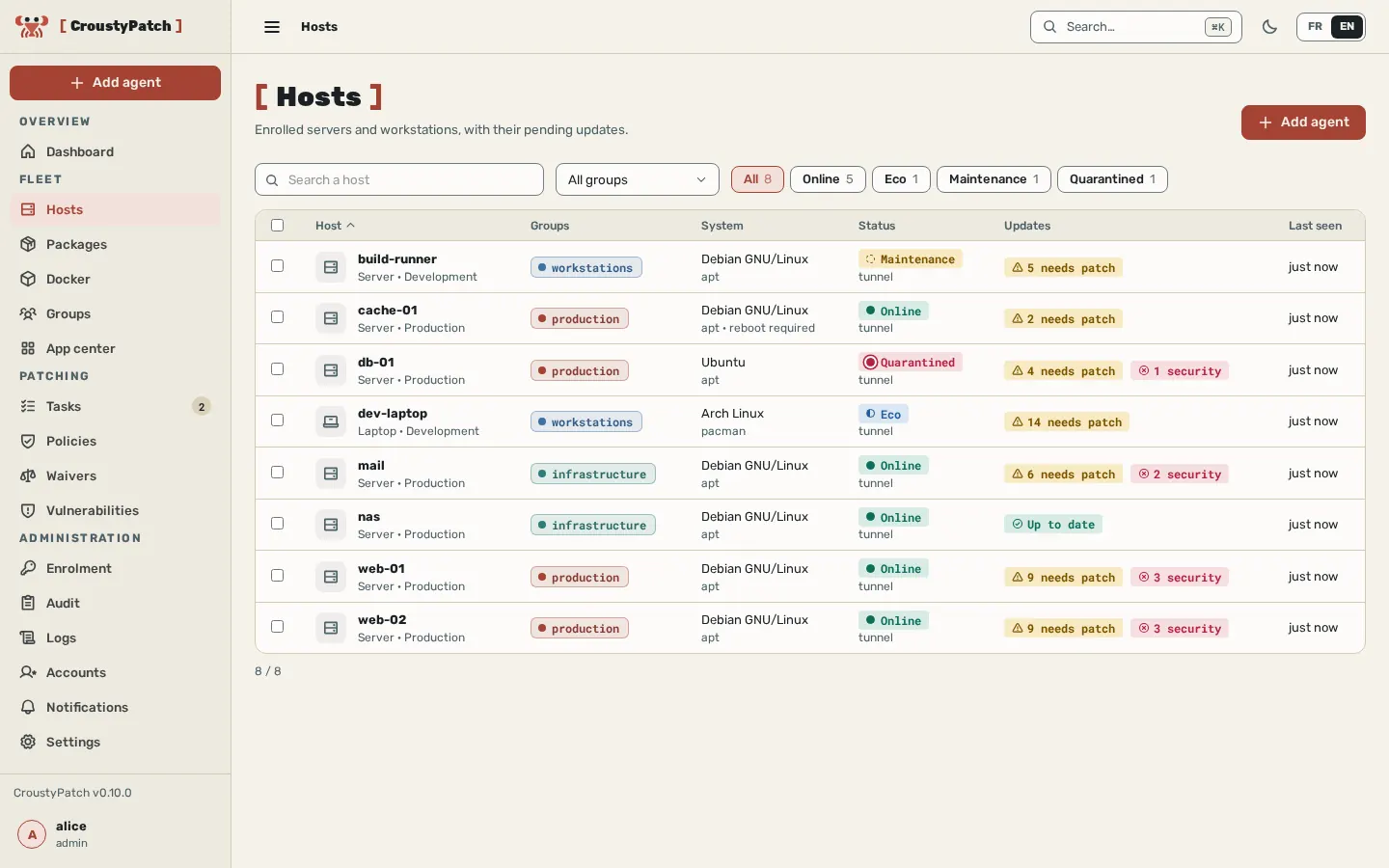
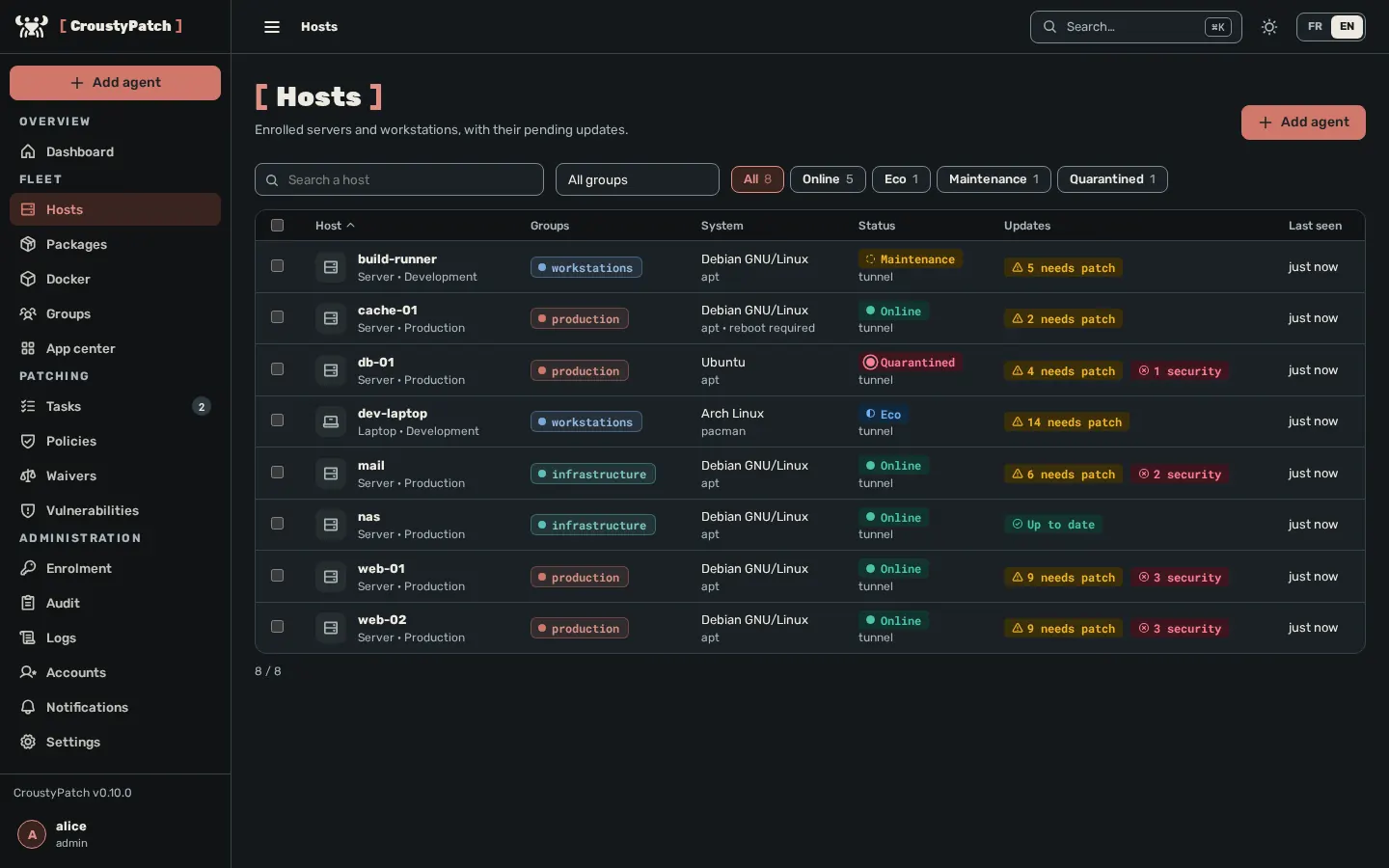
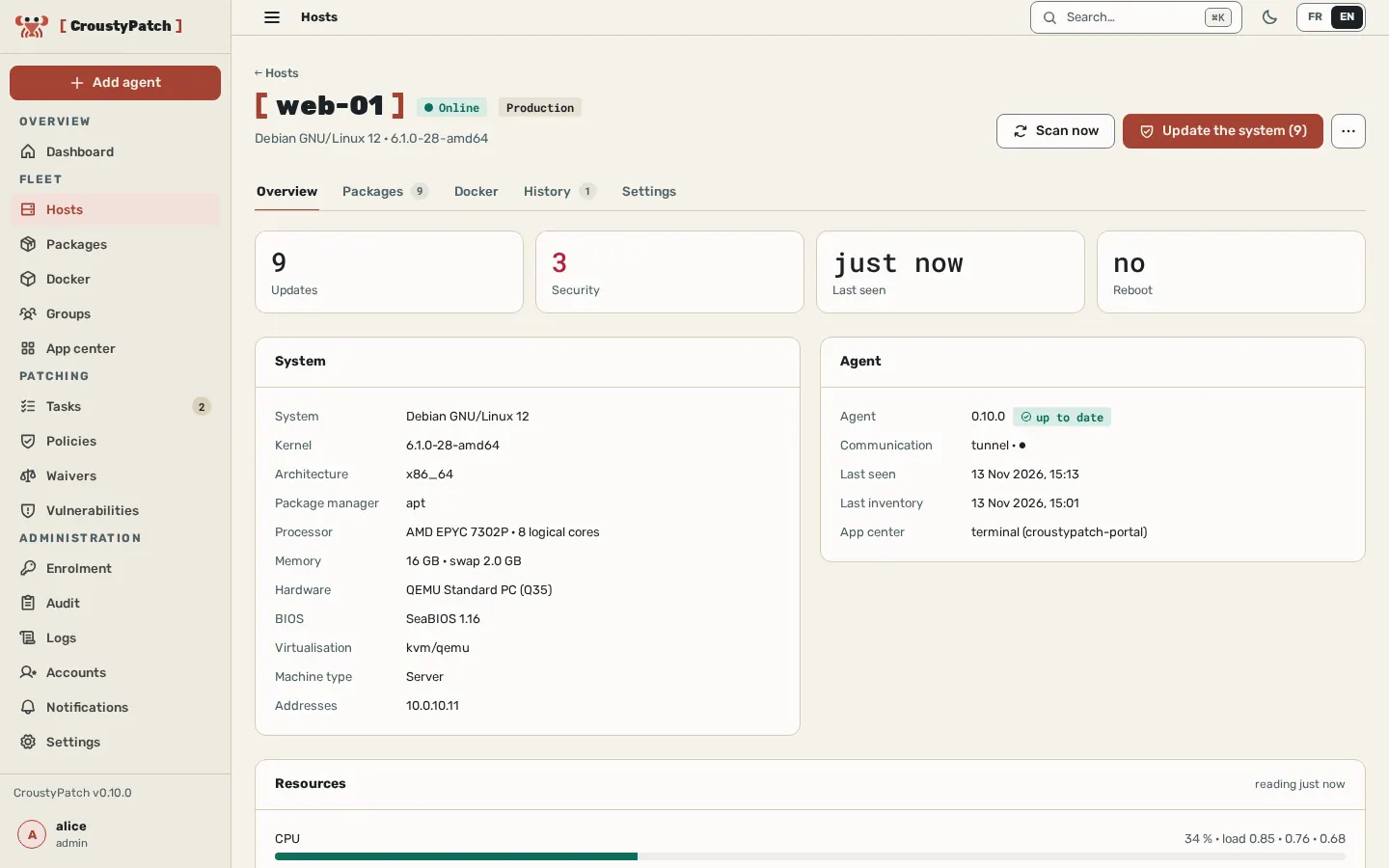
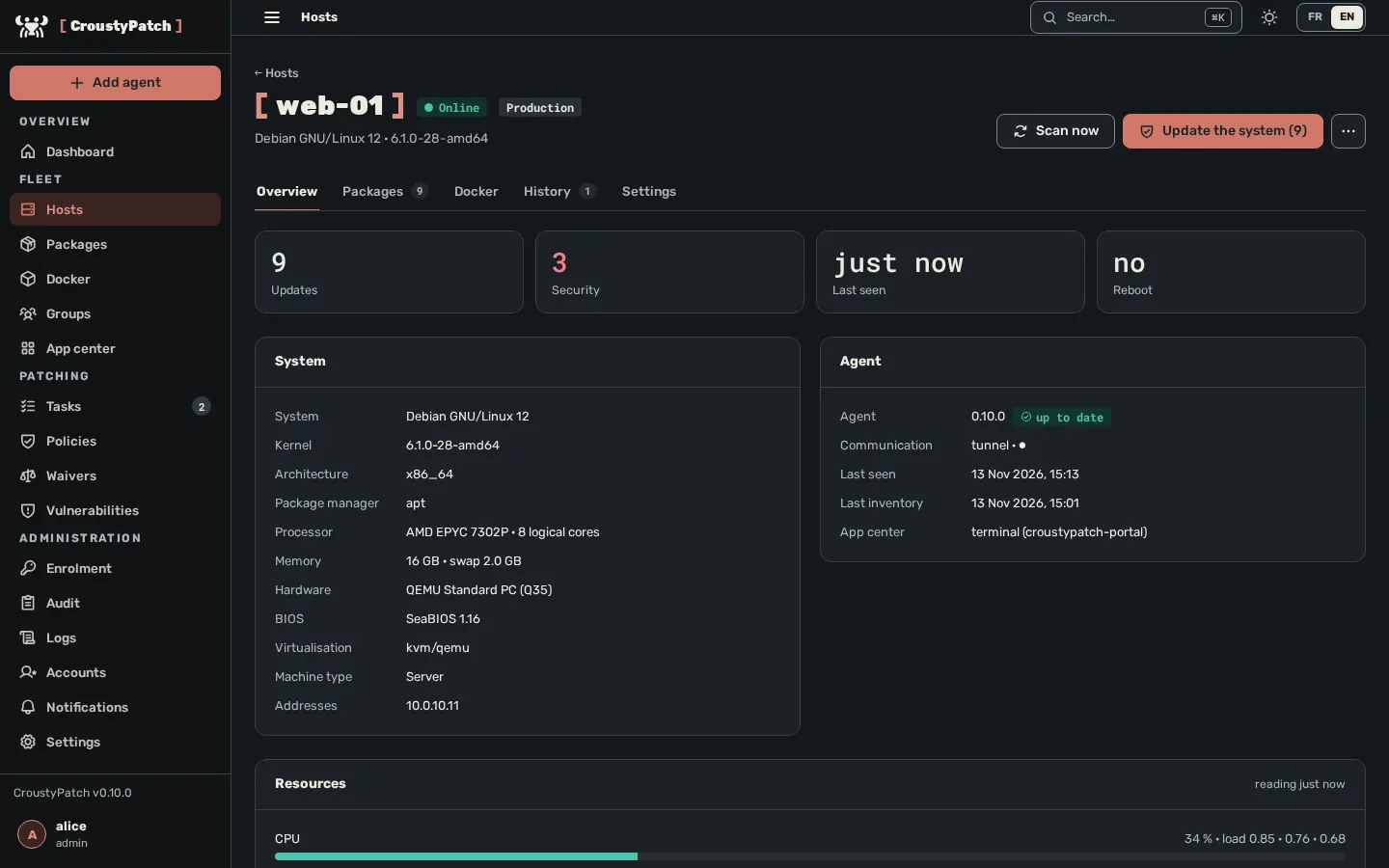
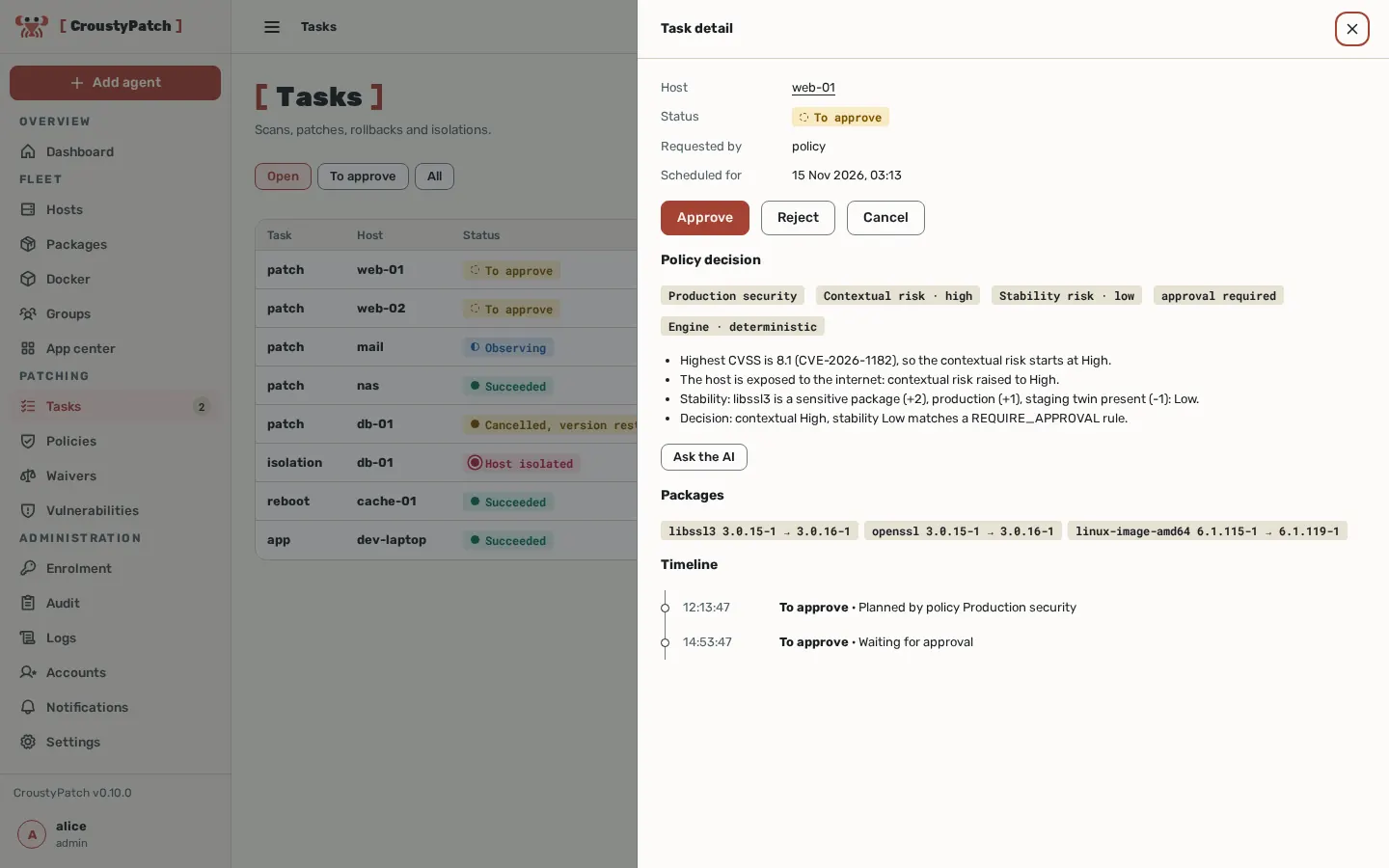
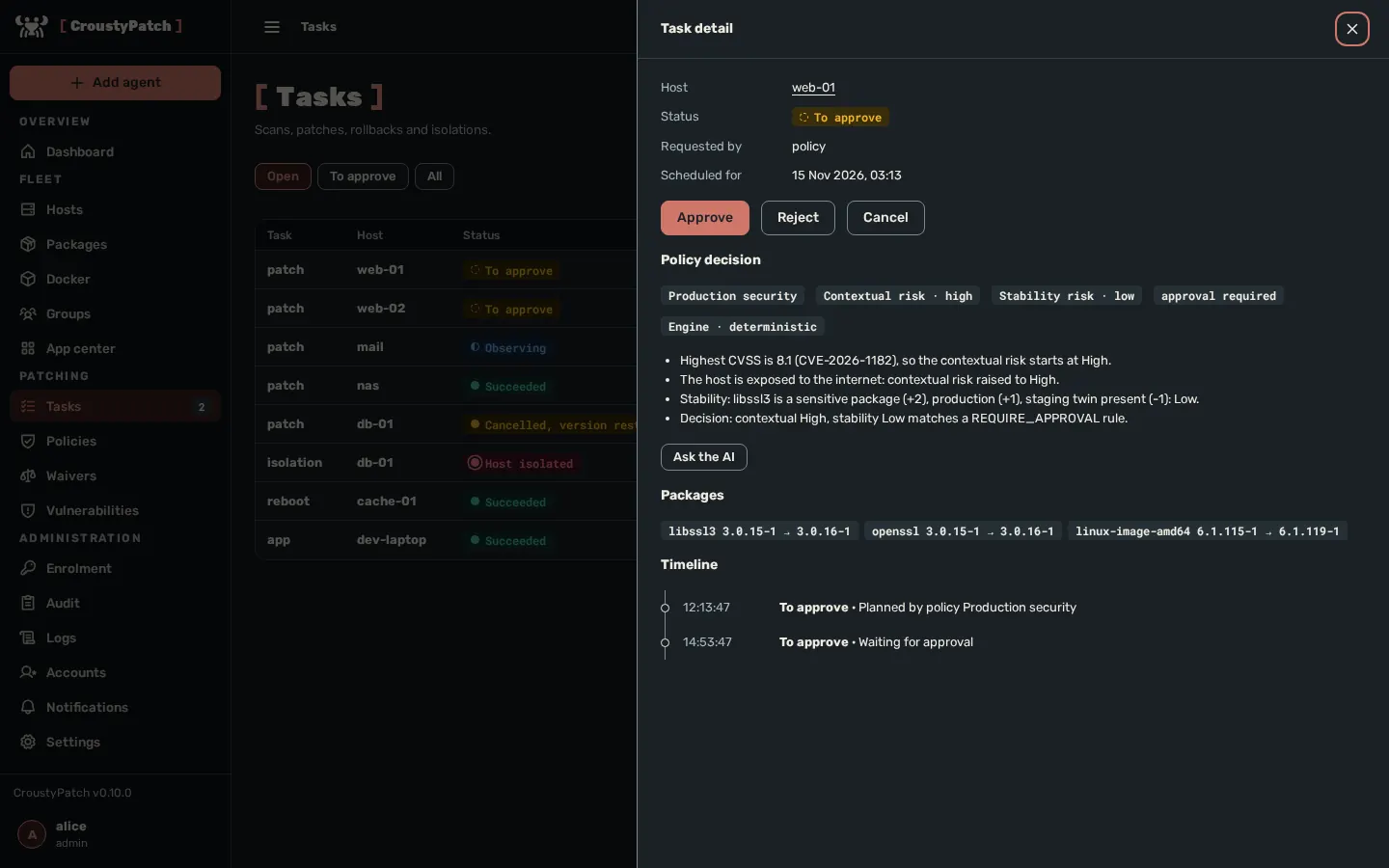
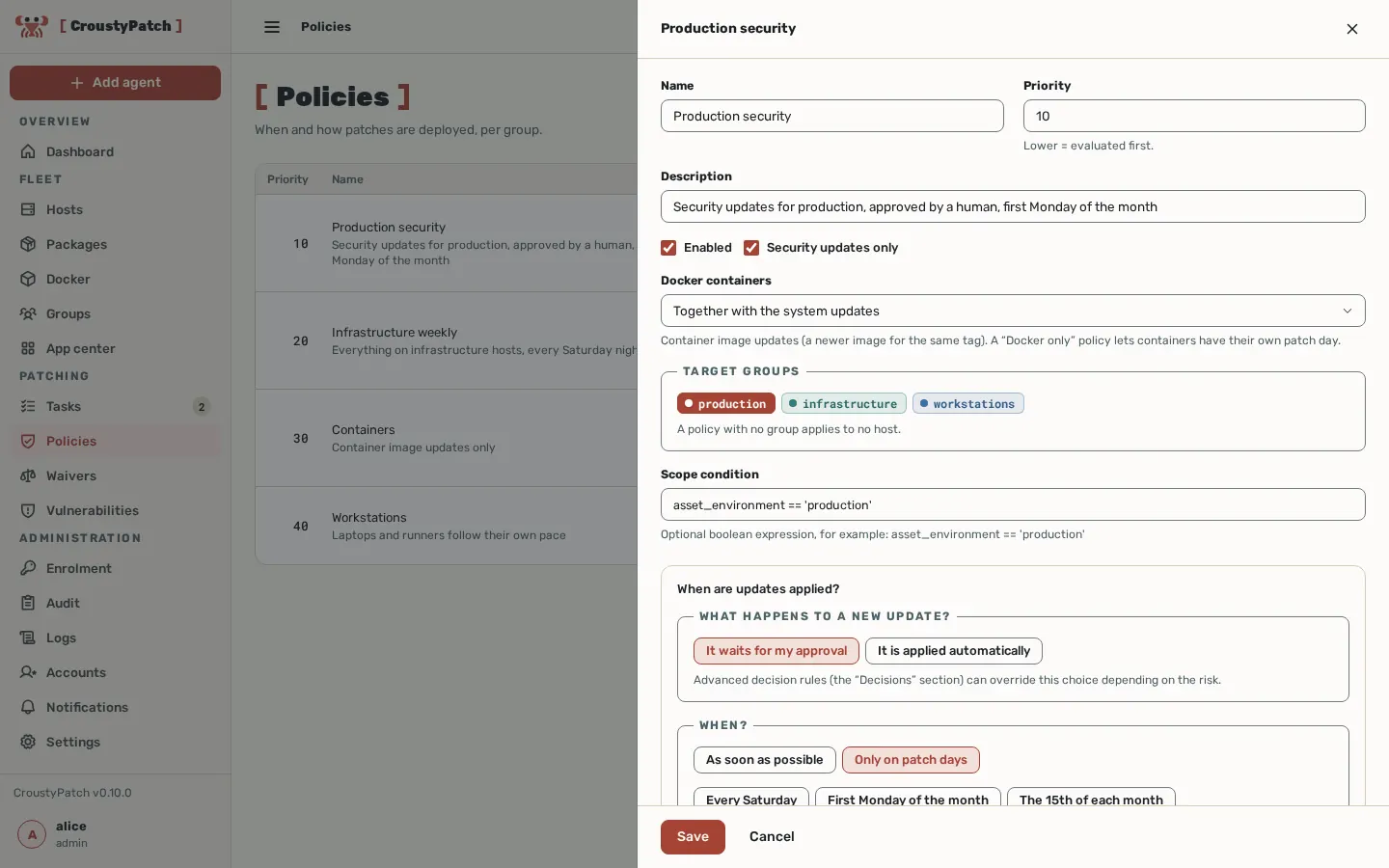
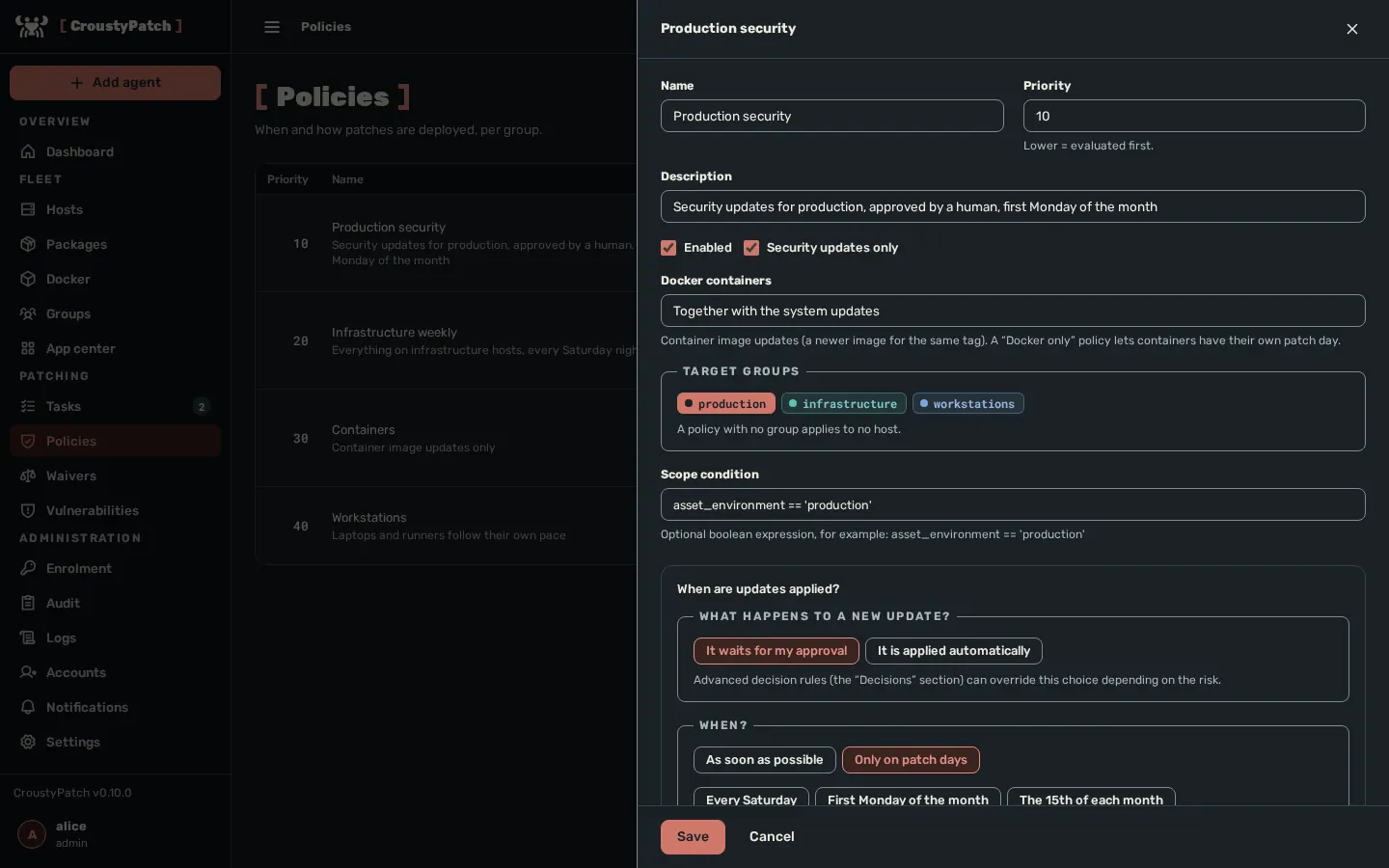
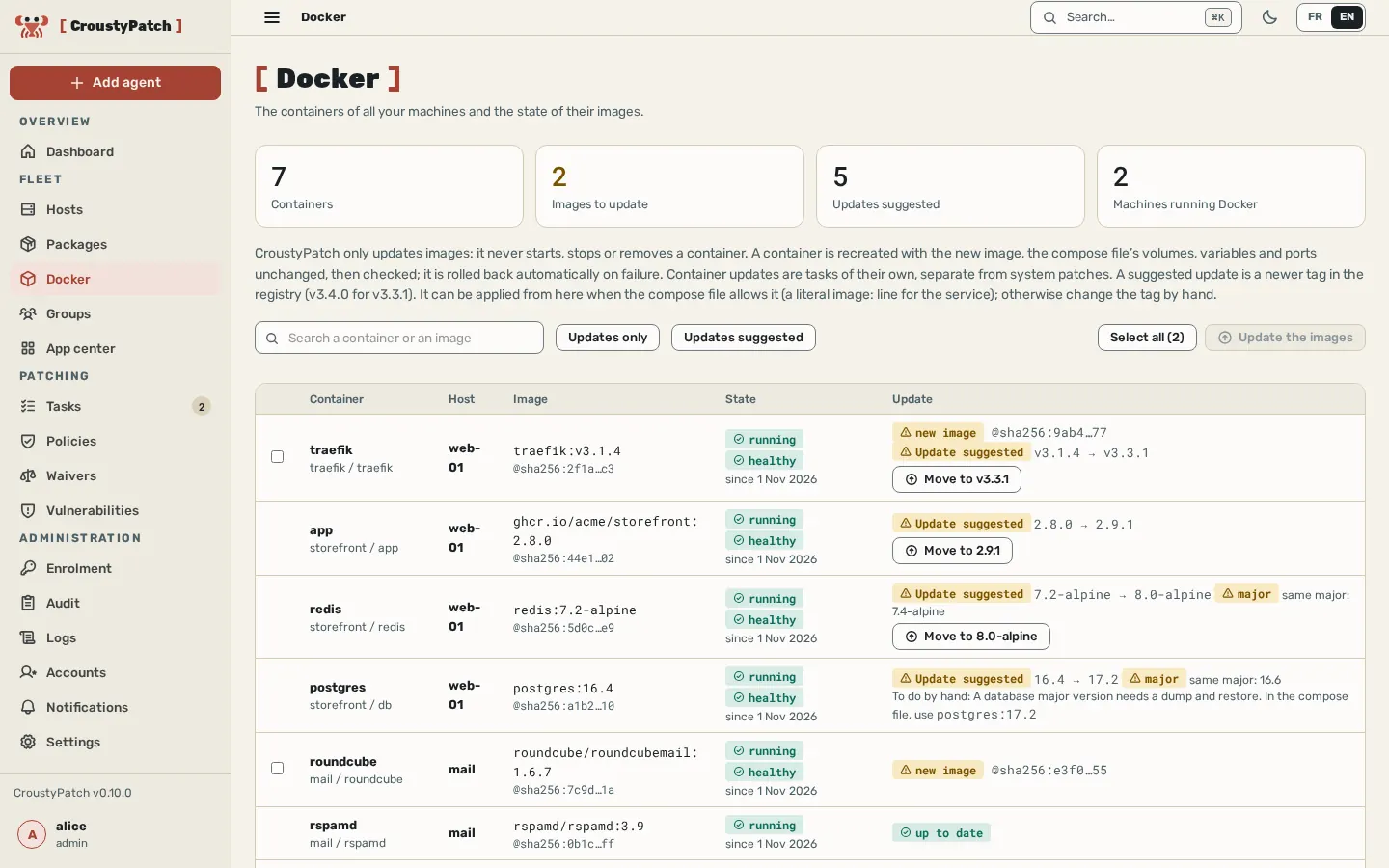
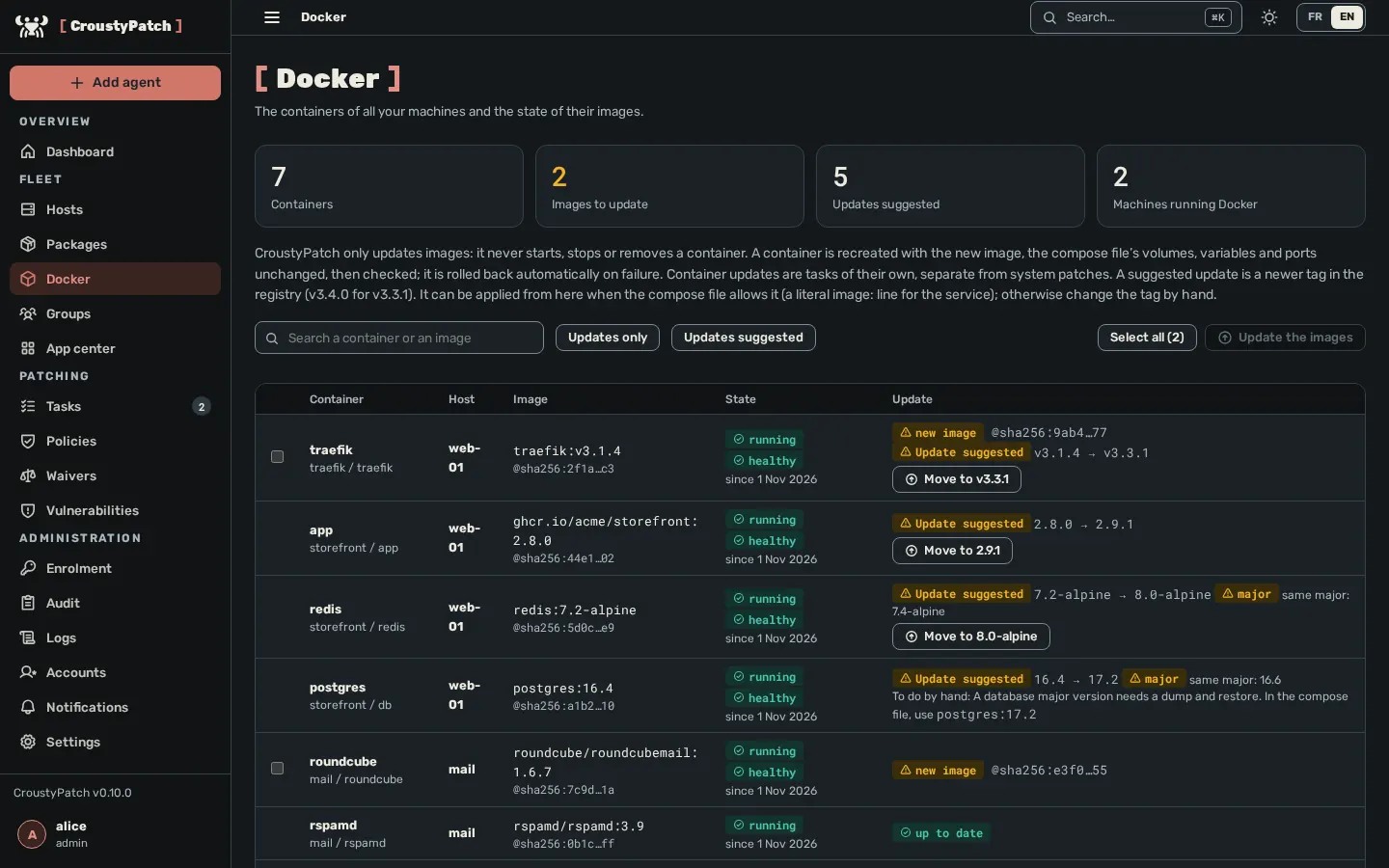
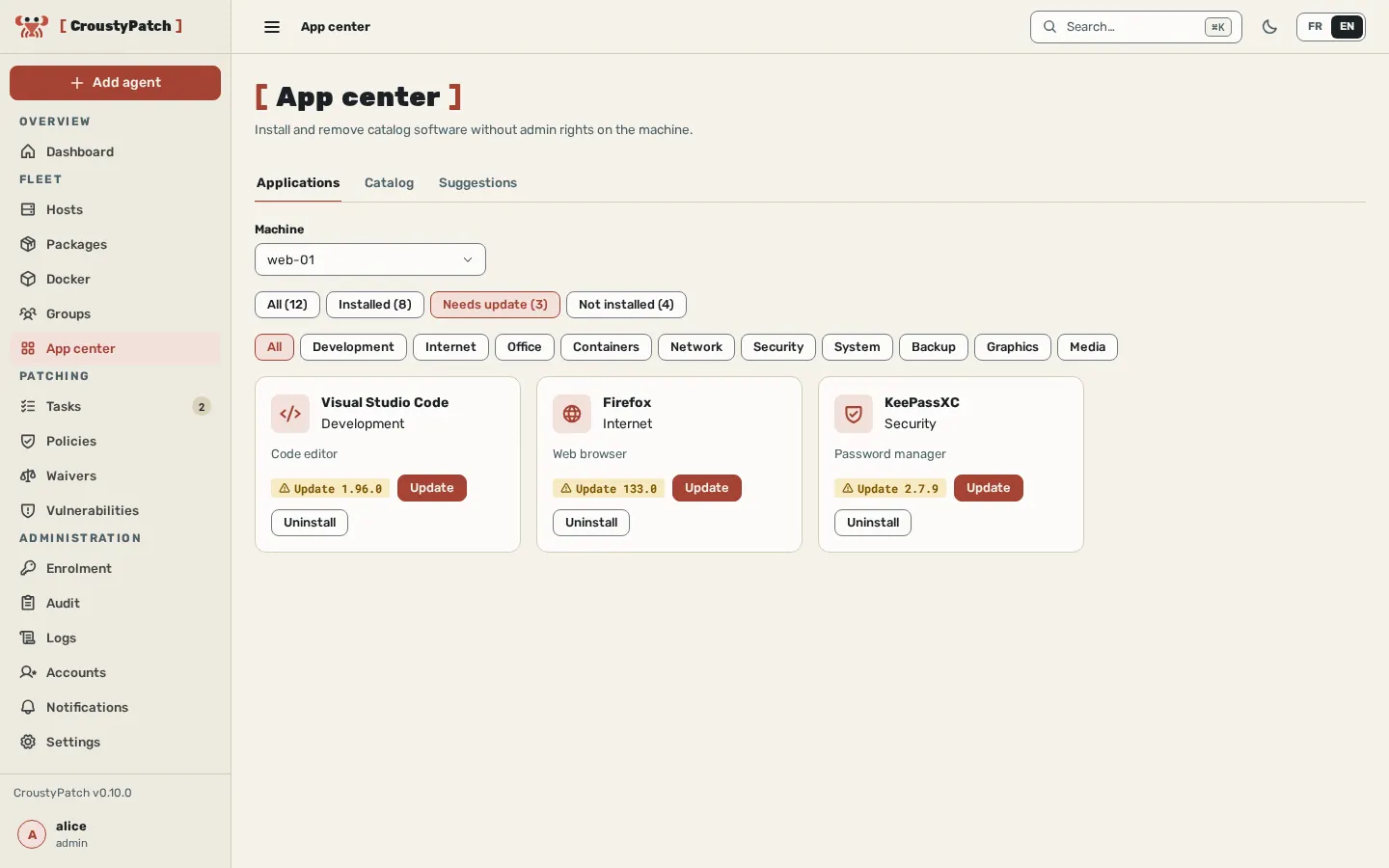
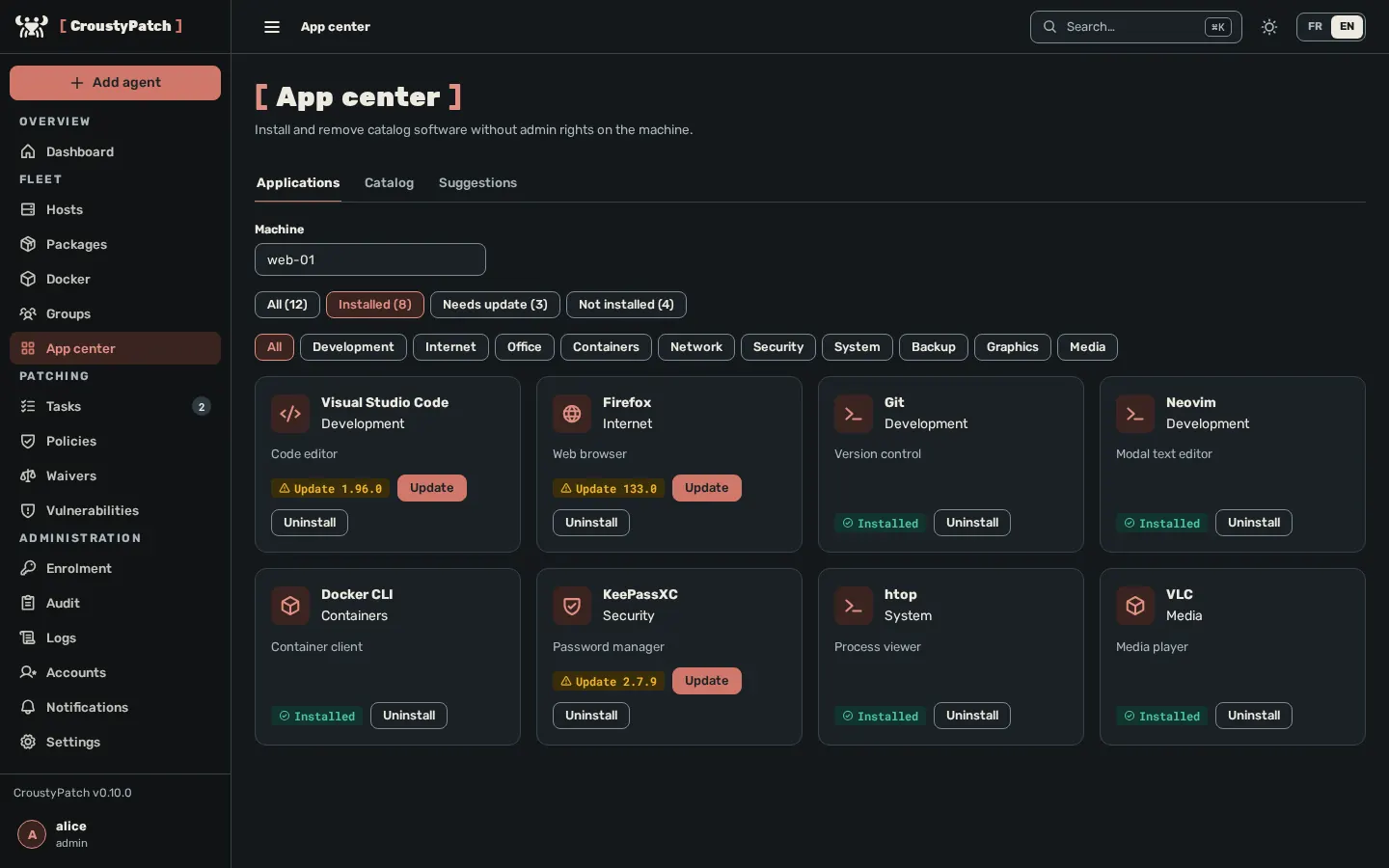
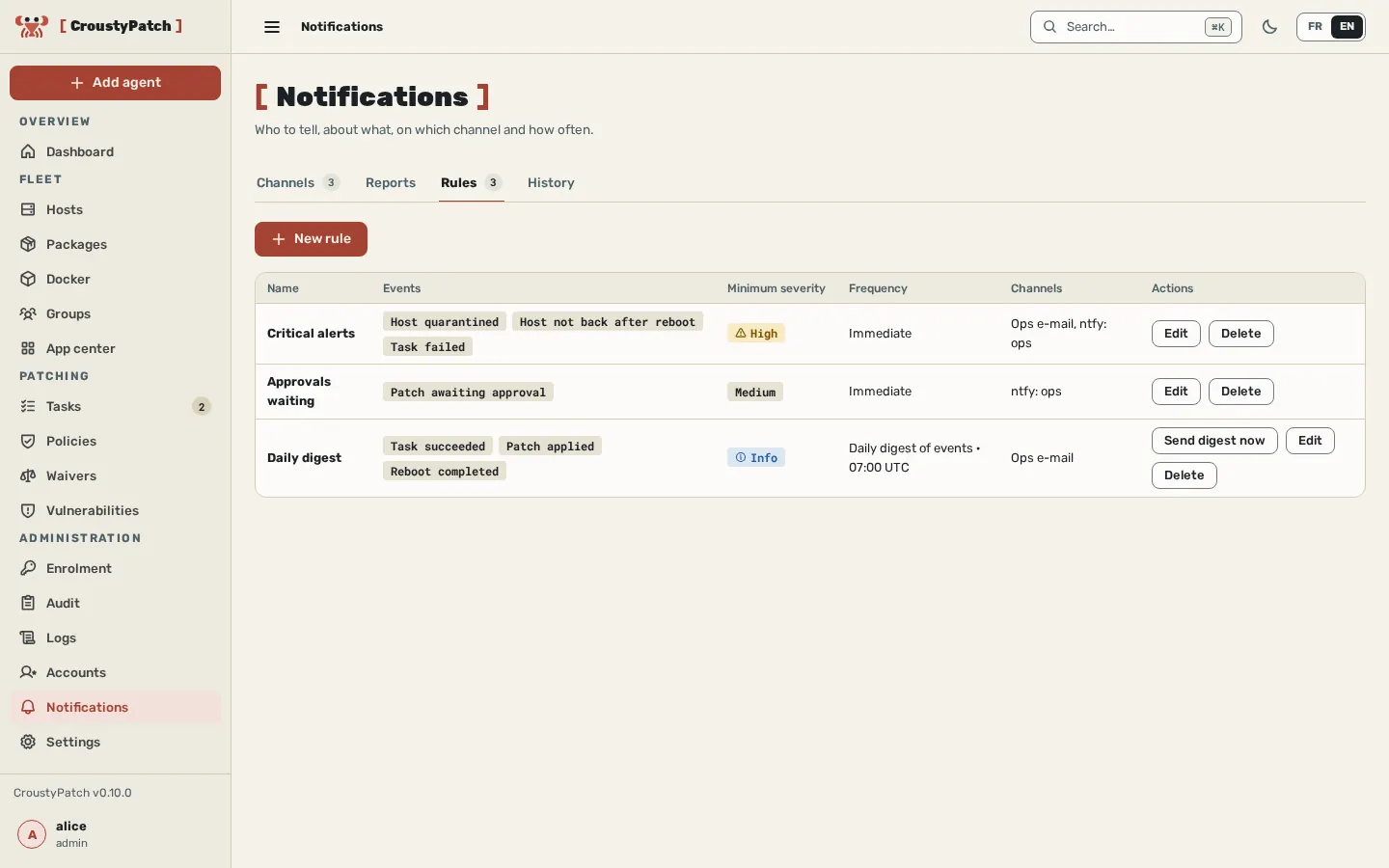
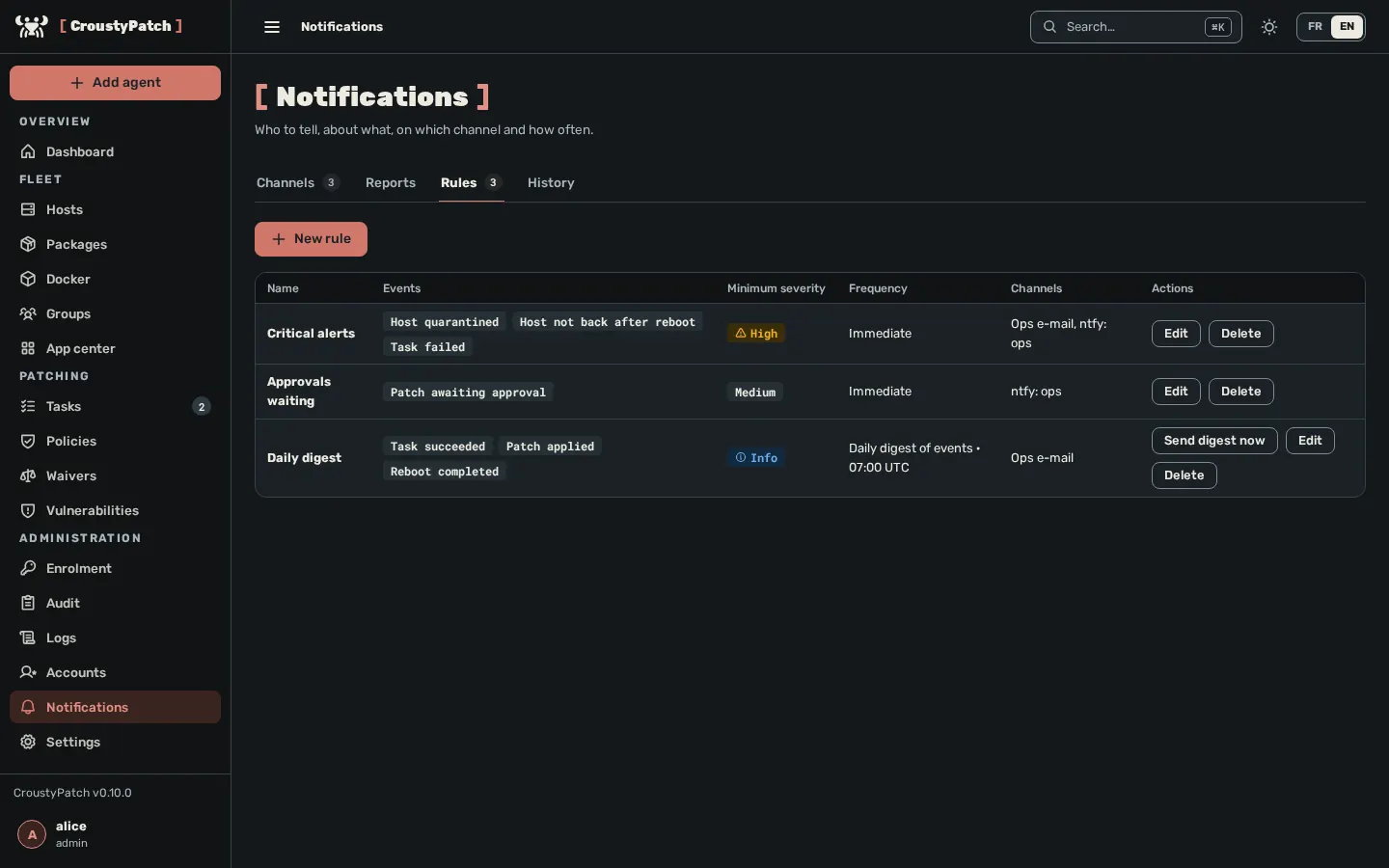
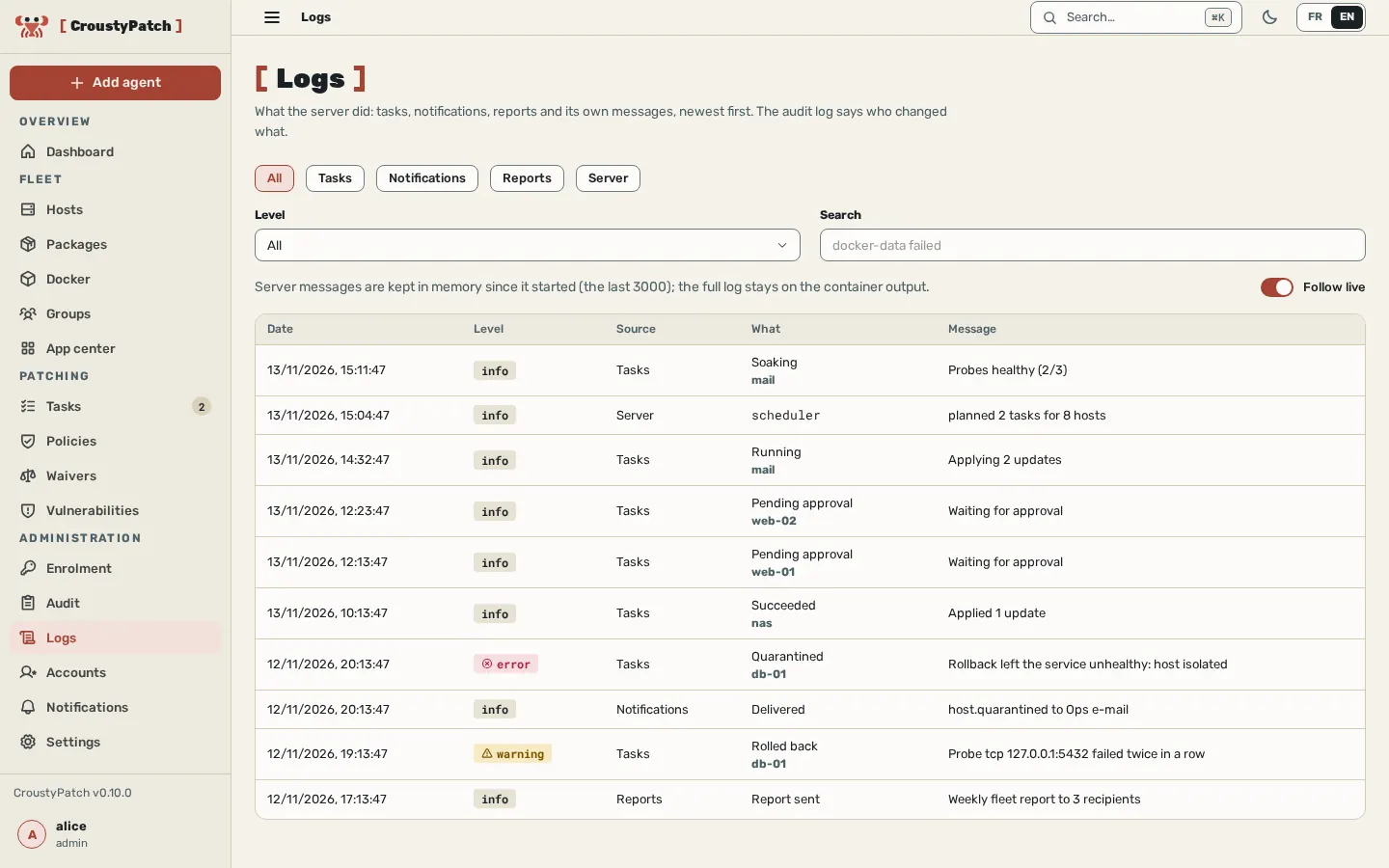
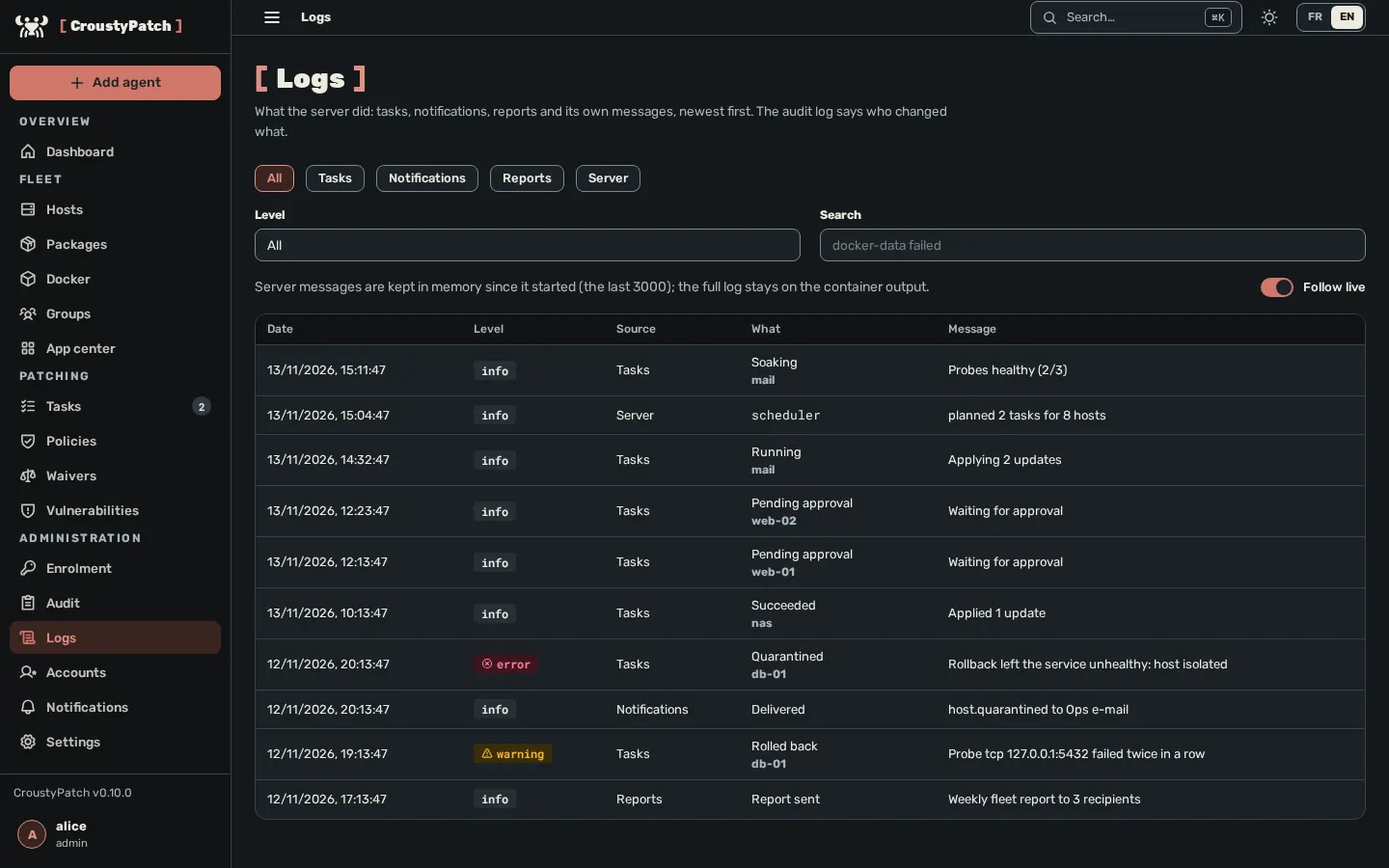
Slide 1 of 9: Dashboard
02 · FEATURES
What it does
Patch without fear
Every patch starts with a restore point and is watched by health probes afterwards. Two failed probes in a row roll it back by itself.
- apt and pacman
- Restore points and automatic rollback
- Quarantine and frozen evidence if even the rollback fails
03 · THE PIPELINE
What happens to a patch
- 01
Decide
The policy engine rates contextual risk (CVSS, exploitation, exposure) and stability risk, then picks auto-deploy, approval or block. The reasoning is stored on the task.
- 02
Prepare
On the patch day the server signs a command for that one agent. The agent checks it, then builds a restore point and refuses to go on if a package cannot be restored.
- 03
Apply and soak
The update runs with fixed arguments, no shell. Then health probes watch the machine for the soak time you set.
- 04
Roll back by itself
Two failed checks in a row of the same probe restore the restore point. If even that fails, the host is isolated and its evidence frozen.
- 05
Tell people
Every step is audited in a hash-chained log, and the event goes to e-mail, a signed webhook, ntfy or Gotify.
policy      prod-security (priority 10)
contextual  Critical  (CVSS 9.8, exploited)
stability   Low
decision    REQUIRE_APPROVAL
planned     next patch day, 02:00 Europe/Paris
04 · EVERY SCREEN
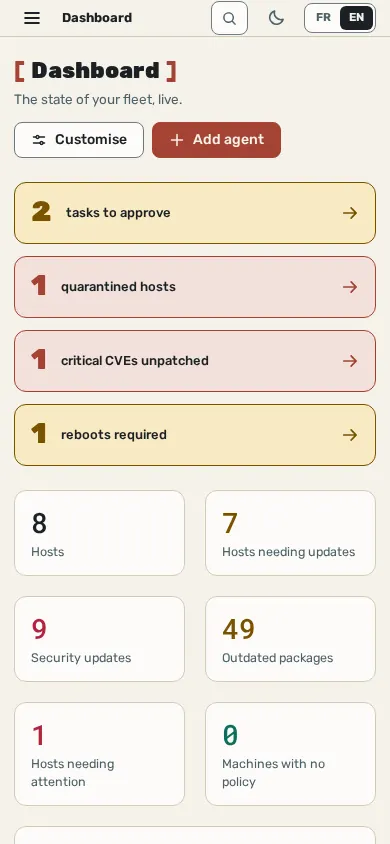
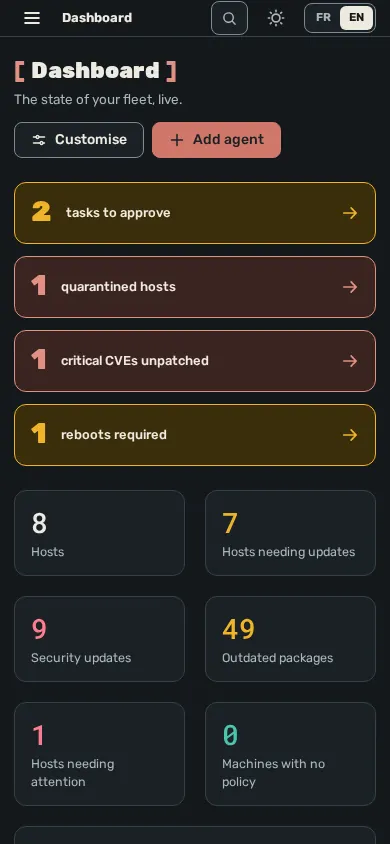
In your pocket, too
The interface folds to a drawer on phones and keeps every action, so you can approve a patch from the train.
05 · AND ALSO
Built to be trusted
06 · ARCHITECTURE
How it fits together
The web interface is a static Next.js export served by the server itself, so there is a single thing to deploy.